How to play Dirt Rally 2.0 on Mac with force feedback (CrossOver + Torqer)
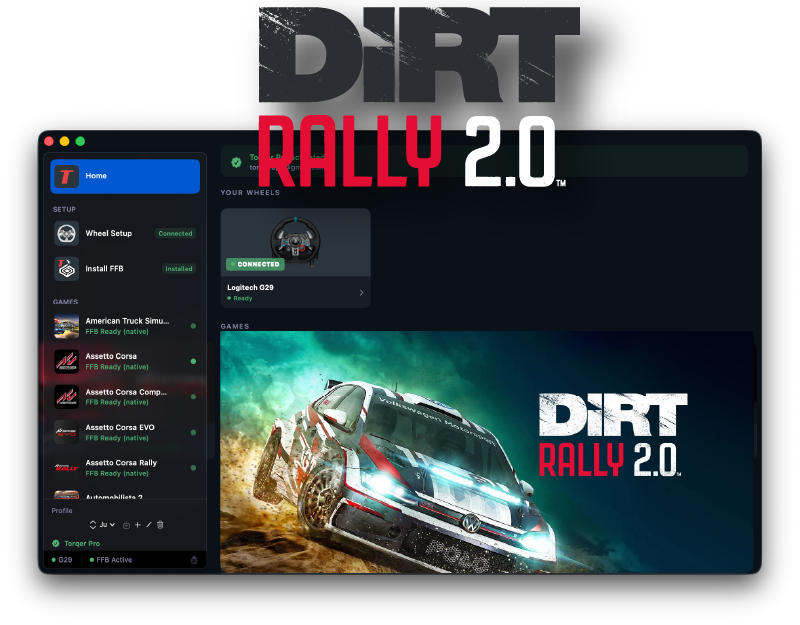
Dirt Rally 2.0 runs very well on Apple Silicon Macs through CrossOver, and with Torqer you can get proper force feedback on supported wheels. That matters a lot in a rally game like this, because the wheel is where you feel front-end grip, weight transfer, surface change, and the moment the car starts to move around underneath you.
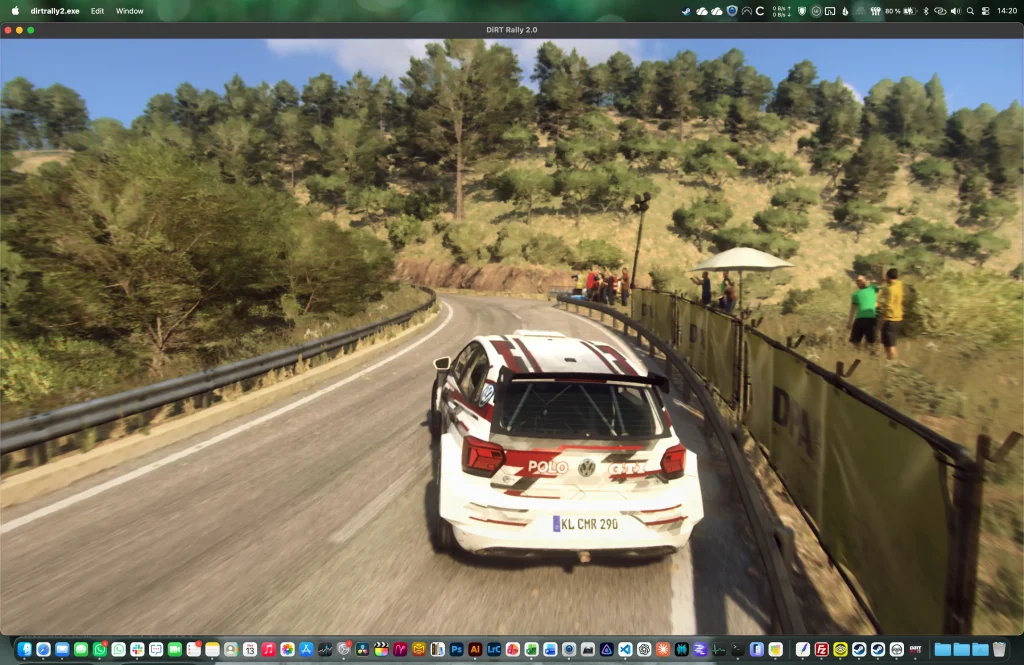
The good news is that the Steam version of Dirt Rally 2.0 has now been verified working with native FFB through Torqer. The one thing to watch out for is pedal binding: Dirt Rally 2.0 appears to be quite sensitive to the direction of travel it sees during axis binding, and it does not offer a simple in-game invert toggle for throttle, brake, or clutch. If a pedal binds the wrong way, clear it and bind it again carefully.
This guide covers the exact setup that has been confirmed working.
What you’ll need
- A Mac with Apple Silicon (M-series) running macOS 13 or later
- A supported racing wheel — for the current compatibility list, check Torqer’s supported wheels. Popular examples include the G29 and G923.
- CrossOver
- Torqer — free download, includes a 5-day full-feature trial
- A Steam copy of Dirt Rally 2.0
Step 1 – Prepare your Mac
1a. Install CrossOver
- Download CrossOver from codeweavers.com
- Drag it to
/Applications - Launch it
1b. Create a Windows 10 64-bit bottle
- In CrossOver, click New Bottle
- Create a Windows 10 64-bit bottle
- Name it something like
Dirt Rally 2.0orSteam
Open the bottle settings and use this verified baseline:
- D3DMetal: enabled
- MSync: enabled
This article is based on a confirmed working setup on CrossOver 26.10 with that configuration.
Step 2 – Install Steam and Dirt Rally 2.0
- Select the bottle in CrossOver
- Click Install Software
- Search for Steam and install it
- Sign into Steam
- Install Dirt Rally 2.0
Once the game is installed, launch it once to make sure it reaches the menus, then close it before setting up force feedback.
Tip: Enable macOS Game Mode before launching. It can help reduce background CPU and GPU load, which improves frame pacing in CrossOver. Guide: How to enable Game Mode on Mac for CrossOver and Wine games
Step 3 – Install Torqer and enable FFB
3a. Download and install Torqer
Download Torqer, open the DMG, and drag Torqer to your Applications folder.
Launch Torqer. On first launch it starts a 5-day full-feature trial automatically.
3b. Connect your wheel
Plug in your wheel via USB if it is not already connected. Torqer should detect it automatically and show a green connected state.
3c. Install Torqer into your CrossOver bottle
- In Torqer, click Install FFB in the sidebar
- Select your Dirt Rally 2.0 bottle
- Click Install
This installs Torqer’s FFB components into the bottle so Dirt Rally 2.0’s force feedback signal can reach the wheel.
3d. Use Native FFB
Dirt Rally 2.0 currently uses Native FFB, which means Torqer forwards the game’s own force feedback signal directly to the wheel once Torqer FFB is installed in the correct bottle.
Step 4 – Configure the wheel in-game
Launch Dirt Rally 2.0 through CrossOver and go to the control settings.
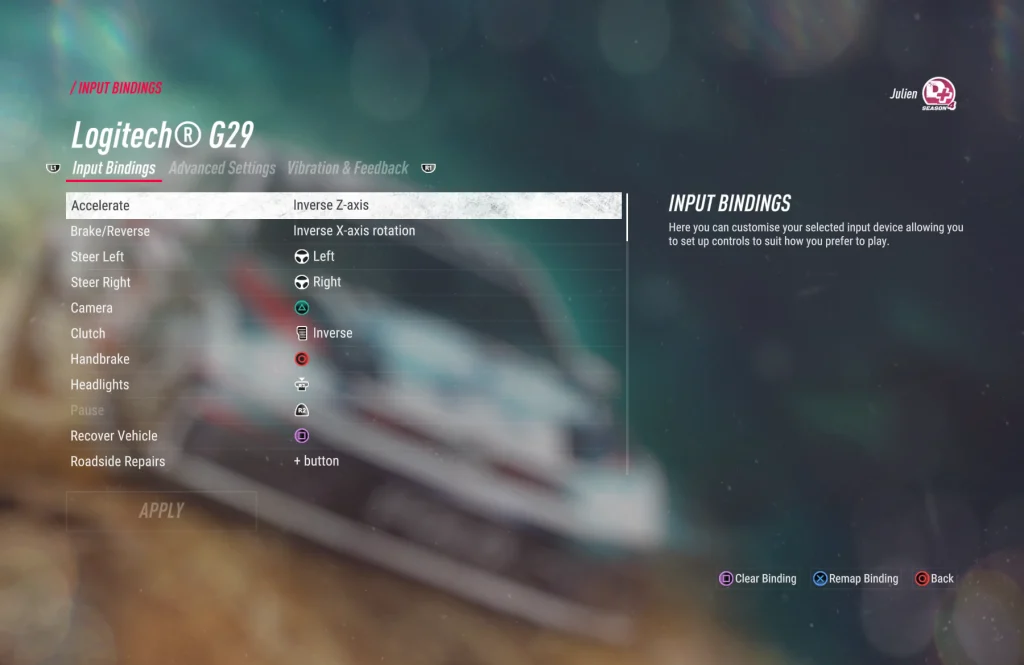
Make sure your wheel is the active input device, then confirm or bind:
- Steering
- Throttle
- Brake
- Clutch if applicable
- Sequential gears, paddles, or handbrake if you use them
Then enable force feedback in-game and start with sensible values rather than maxing every slider immediately.
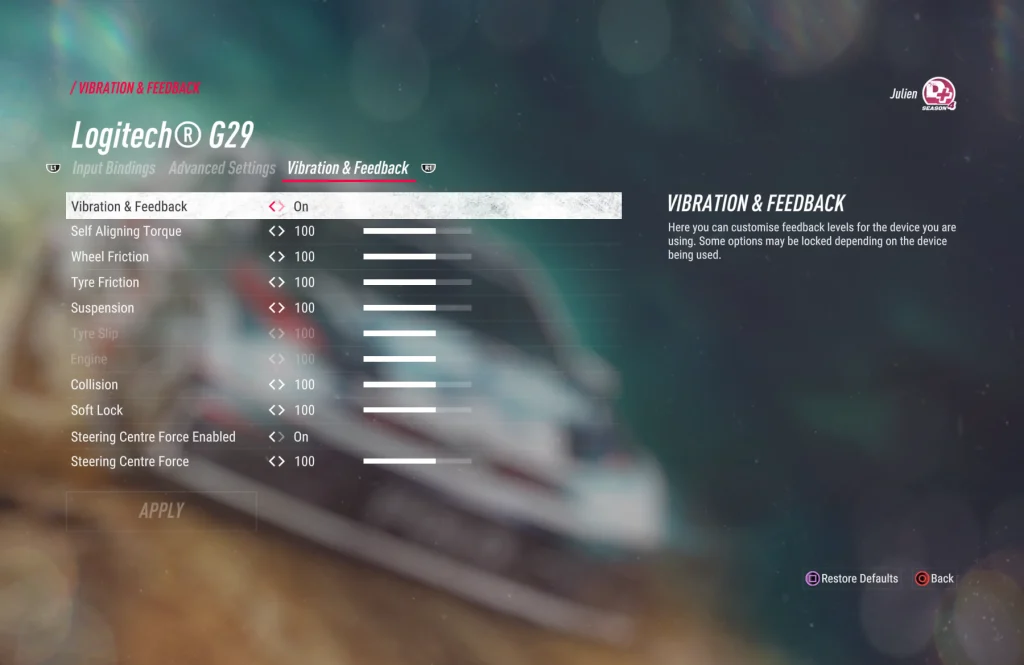
Good starting points:
- Self Aligning Torque: medium to high
- Wheel Friction / Tyre Friction / Suspension: moderate
- Collision / Soft Lock: lower, then raise to taste
- Overall strength: enough to feel weight, but not so high that gravel sections become harsh or vague
If the wheel feels too light after that, raise Native FFB Intensity in Torqer for Dirt Rally 2.0.
Step 5 – Important pedal binding warning
This is the main Dirt Rally 2.0-specific gotcha.
The game appears to be very sensitive to the direction of travel it sees when you bind pedal axes, and there is no obvious in-game invert axis option for throttle, brake, or clutch. That means the direction you move the pedal during binding may determine whether the game treats that axis as normal or inverted.
When binding pedals:
- Start with the pedal at rest
- Trigger the bind for that axis
- Press the pedal smoothly in its normal driving direction
- Release it and confirm the input reads correctly
Important: If throttle, brake, or clutch ends up inverted, do not assume Torqer is the cause. Clear that axis in Dirt Rally 2.0 and bind it again carefully. It may take a couple of tries before the game learns the direction correctly.
This was observed on a G29 in the verified working setup, and it is likely to matter for other Logitech pedal sets too.
Step 6 – Drive and fine-tune
Once the wheel is mapped properly, Dirt Rally 2.0 is straightforward: launch Torqer first, then launch the game through CrossOver.
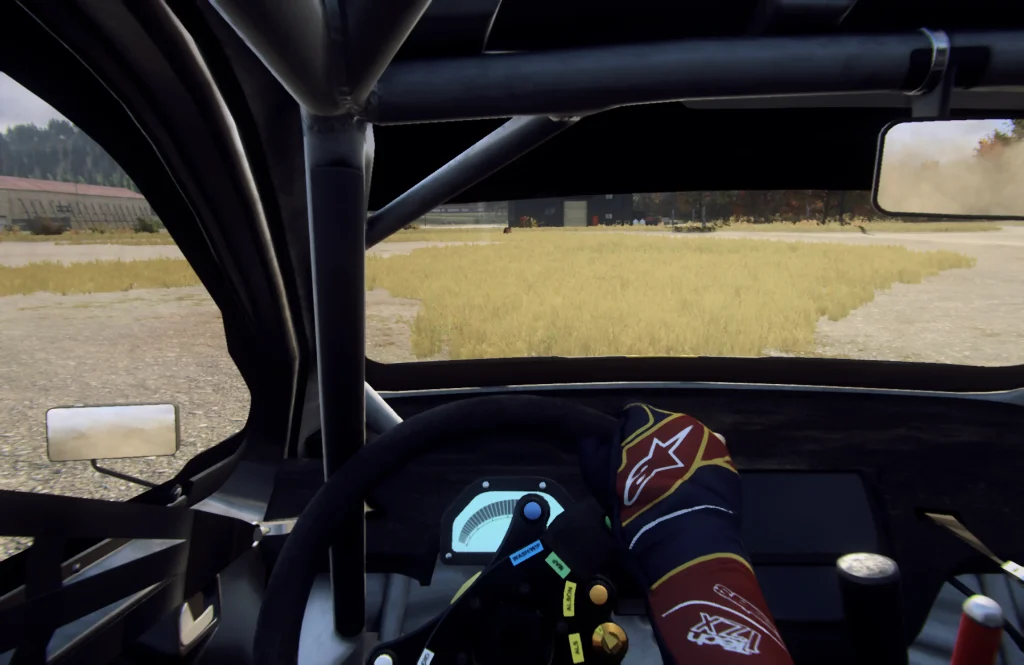
Use your first few stages to tune three things:
- steering weight on tarmac
- how clearly the wheel communicates gravel surface changes
- how harsh impacts and ruts feel over rough sections
If the wheel feels too light:
- raise the in-game FFB strength first
- then raise Native FFB Intensity in Torqer
If the wheel feels too busy or harsh:
- lower the secondary effect sliders in Dirt Rally 2.0
- keep the main steering force stronger than the extra canned effects

Rally games usually feel better when the wheel gives you clear front-end information, not every effect at maximum.
Before troubleshooting
If you use a Logitech wheel and Logitech G Hub is installed on your Mac, remove it first.
G Hub conflicts with Torqer’s direct hardware access and can stop the wheel from behaving properly.
Open G Hub and use its uninstall flow, or drag it from /Applications to the Trash and remove its launch agent:
sudo rm /Library/LaunchAgents/com.logi.ghub.engine.plistLeave your wheel plugged in after that. Torqer talks to the hardware directly.
Troubleshooting
The force feedback feels wrong
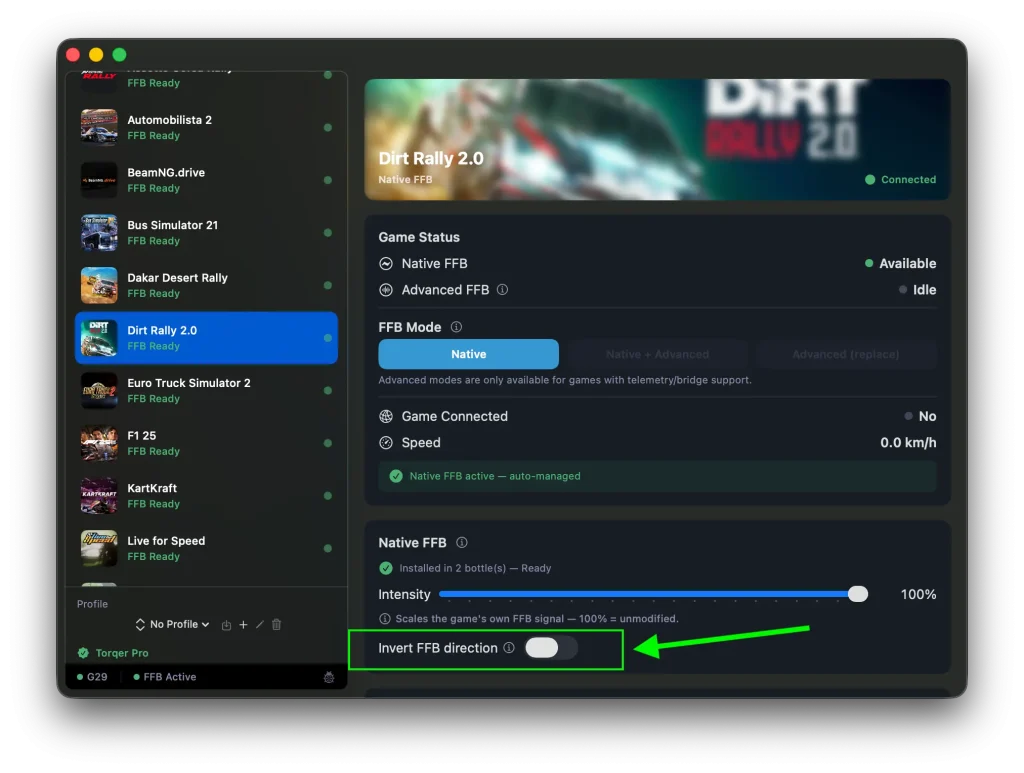
Default DR2.0 FFB sometimes gets inverted with some wheel models (e.g. Moza R5). So if you feel that your wheel is “diving into a turn” instead of resisting rotation, FFB forces may be inverted.
The fix is easy: in the Torqer app, click the Dirt Rally 2.0 game card (from the left menu bar), and tick the “Invert FFB direction” toggle. This setting will reverse haptic forces and make FFB feel right again in-game.
The wheel steers, but there is no force feedback
Make sure Torqer is running before launching Dirt Rally 2.0, your wheel shows as connected in Torqer, and Torqer FFB is installed in the same bottle where the game is installed. If needed, reinstall it from Torqer’s Install FFB page.
For the general checklist, read: No force feedback on Mac — why it happens and how to fix it
Throttle, brake, or clutch is inverted
Clear the affected axis in Dirt Rally 2.0 and bind it again, making sure the first movement the game sees is a normal pedal press from rest. Dirt Rally 2.0 appears to infer axis direction from that binding motion, and it may take a couple of attempts to get all pedals mapped correctly.
The game detects the wheel, but the feel is weak
Raise Dirt Rally 2.0’s main FFB strength first, then raise Native FFB Intensity in Torqer.
Performance feels uneven
Confirm you are on CrossOver 26.10, with D3DMetal and MSync enabled in the bottle settings. Also enable macOS Game Mode: How to enable Game Mode on Mac for CrossOver and Wine games
Nothing works at all
Check that Logitech G Hub is not installed, Torqer sees the wheel as connected, and Dirt Rally 2.0 is in the same CrossOver bottle where Torqer FFB was installed.
Tested configuration
Steam version of Dirt Rally 2.0 · CrossOver 26.10 · Windows 10 64-bit bottle · D3DMetal enabled · MSync enabled · Apple Silicon MacBook Pro M4 Pro · Logitech G29 · Torqer native FFB working
If you run into something not covered here, you can contact us.